Public Sector & Community-Based Monitoring

Collect community-level and self-reported data directly from residents, service users, program participants and people in the field.

Collect community-level and self-reported data directly from residents, service users, program participants and people in the field.

  • A crowd of people gathered at a street intersection
  • A large crowd of people and children gathered outdoors for a community meeting or event with tress and a hut in th background
  • A young man photographing trash by a urban waterway as part of environmental monitoring
  • a group of people dicussing by a table
  • A community member photographing floating trash in a polluted urban waterway as part of environmental monitoring
  • A group of volunteers, including a wheelchair user, sorting donation boxes together
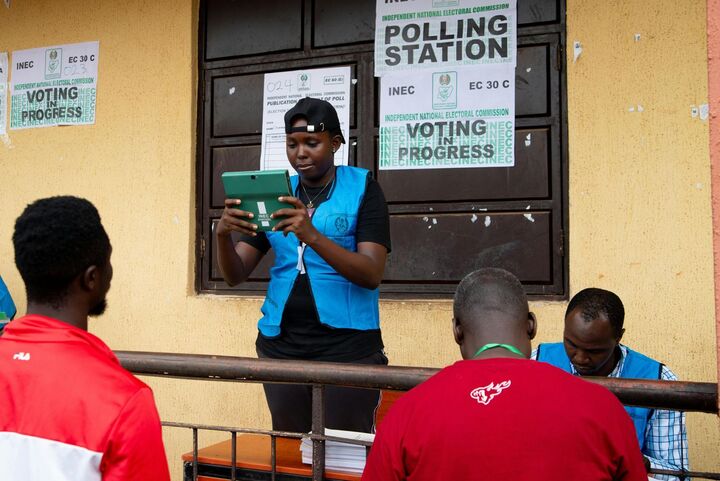
  • A woman speaking at a polling station in front of a "Voting Progress" sign
  • BG Image

Public-sector and community programs often have strong administrative data about what services were delivered, but less information about how those services were actually experienced by the people using them. Poket can provide another source of information by allowing residents, service users, program participants, enumerators, community members, field staff and local organizations to report directly from the field.

Submissions can include self-reported program data, surveys, photos, video, GPS locations, voice notes and other information, including in areas with limited or no connectivity. Programs can also send information, updates and resources back to the people participating.

Some of the challenges we see with community reporting

Some of the challenges we see with community reporting

Some of the challenges we see with community reporting

Participation can be difficult to sustain

Residents, community members and program participants are not program staff, so programs may need to give them a reason to continue participating over time.

Participation can be difficult to sustain

Residents, community members and program participants are not program staff, so programs may need to give them a reason to continue participating over time.

Self-reported information often needs supporting context

Residents, service users and program participants may be reporting on their own experiences or outcomes. Photos, GPS locations, timestamps and other information can help program teams better understand and review what was reported.

Self-reported information often needs supporting context

Residents, service users and program participants may be reporting on their own experiences or outcomes. Photos, GPS locations, timestamps and other information can help program teams better understand and review what was reported.

Connectivity, language and device access vary

Depending on the program, information can be submitted directly by residents, service users or program participants, or collected with the help of enumerators, community organizations or field staff using shared or program-provided devices.

Connectivity, language and device access vary

Depending on the program, information can be submitted directly by residents, service users or program participants, or collected with the help of enumerators, community organizations or field staff using shared or program-provided devices.

Community feedback can arrive long after the issue occurred

More frequent self-reporting can help teams understand changing participant experiences and local conditions between formal evaluations or reporting cycles.

Community feedback can arrive long after the issue occurred

More frequent self-reporting can help teams understand changing participant experiences and local conditions between formal evaluations or reporting cycles.

How Poket works

+

Your team creates surveys and data collection workflows through the Poket Portal. These might cover service quality, program participation, participant experiences, infrastructure, local conditions, accessibility, public assets or other community-level observations. Residents, community members, program participants, enumerators, service users, field staff and partner organizations can submit information through the mobile application. Depending on the program, this can include self-reported program data directly from participants as well as information collected by enumerators or field staff. Submissions can include structured survey responses, photos, video, GPS locations and voice notes. The app can work offline and can be localized depending on the program.

Once information is submitted, your team can review it through the Portal. Photos, GPS locations, timestamps and other supporting information can give reviewers more context when assessing a submission. Poket can also customize AI-assisted verification tools to help identify submissions that may require additional review. Programs can decide whether incentives make sense for the project and what those incentives should be. Information can also move in the other direction through updates, resources, feedback and other content sent back to residents, service users and program participants.

What can program teams see?

+

Poket can provide maps and dashboards based on community submissions, including reported issues by area, service-quality trends, participant experiences and other community-level indicators.

Voice submissions can also be transcribed to make qualitative information easier to review. Programs can choose to share appropriate findings, resources or updates back with participating communities as well.

What teams can use Poket for

Self-reported program data from program participants

Education monitoring

Youth engagement programs

Community protection and local-risk reporting

Citizen-generated data on public services

Participant feedback on local programs

Infrastructure and public-service monitoring

Community safety reporting

Waste and pollution observations

Urban-planning and local-development engagement

Accessibility and public-asset mapping

Traffic and transportation observations

Community service-delivery monitoring

Mystery-shopper and service-experience studies

Participant-led monitoring

Community-based M&E

Interested in exploring a use case?

If you’re trying to understand a program or public service from the perspective of the people using it, we’d be happy to learn more about what you’re working on and show how Poket could be customized around it.

Illustration of a person holding a tablet with a checklist, standing on a busy city street lined with market stalls and vendors

Additional Focus Areas

Interested in exploring a use case?

If you’re trying to understand a program or public service from the perspective of the people using it, we’d be happy to learn more about what you’re working on and show how Poket could be customized around it.

Frequently Asked Questions +

Interested in learning more? Drop us a line!

Whether you have questions about a specific project or want to learn more about our solution, we're here to help! Feel free to reach out and connect with us.

Message

Interested in learning more? Drop us a line!

Whether you have questions about a specific project or want to learn more about our solution, we're here to help! Feel free to reach out and connect with us.

Message

Interested in learning more? Drop us a line!

Whether you have questions about a specific project or want to learn more about our solution, we're here to help! Feel free to reach out and connect with us.

Message